
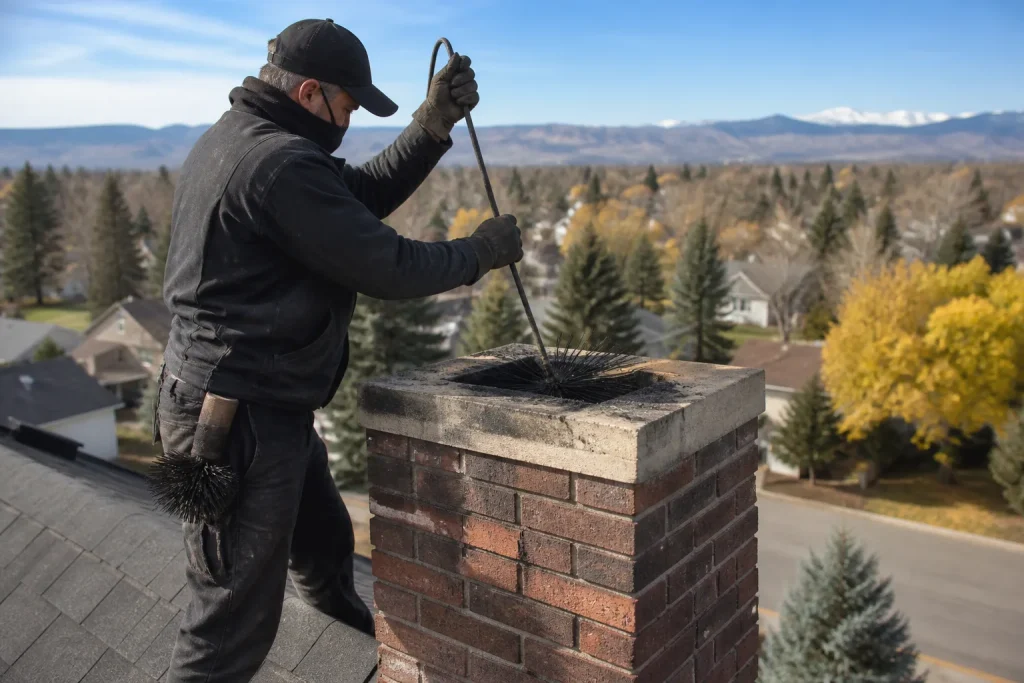
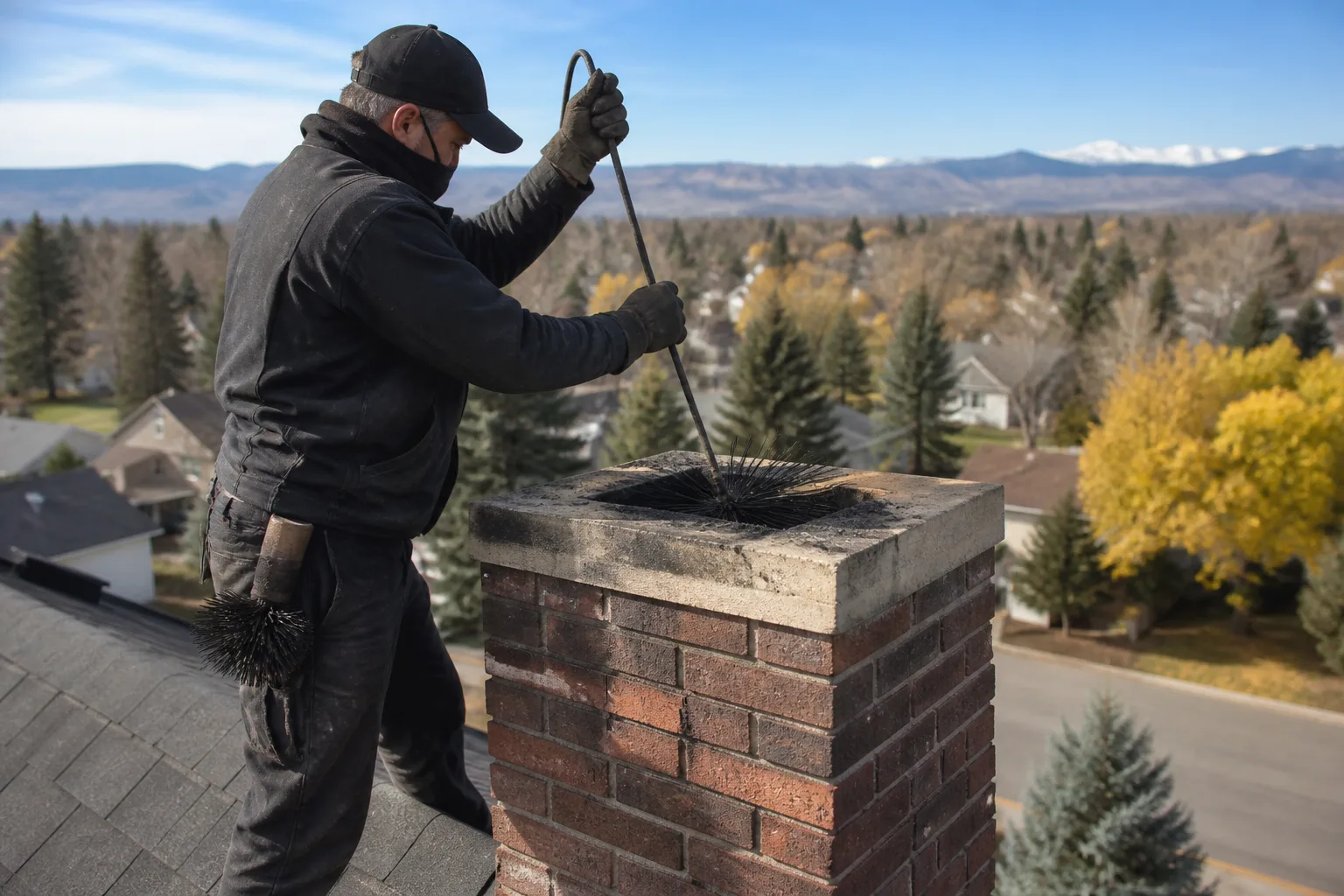
Top Signs You Need Chimney Cleaning Service – Don’t Ignore These
A strong draft and no smoke smell indoors is not proof your chimney is clean. The most dangerous thing inside a flue, third-degree creosote, glazes onto the liner in a hard, tar-like layer that often carries almost no odor until the day it ignites. In our experience, homeowners call about smell and smoke, but the calls that matter most start with something else: a missing cap, a cracked crown, a liner tile that shifted over one Colorado winter. Those are the signs that don’t announce themselves.
What are the real warning signs your chimney needs cleaning?
Ranked by actual risk rather than by how easy they are to notice, the signs that matter are the ones that point to fire hazard or structural failure, not to a dirty firebox. A soot-streaked firebox is cosmetic. A glazed flue is a fire waiting for a hot enough load of wood. Those two things can look identical from the living room floor.
Here’s the order we’d put them in, most serious first:
- Glazed, shiny creosote on the flue walls. This is third-degree creosote, and it’s the fuel behind most chimney fires. You may see it if you shine a light up the flue; you’ll often smell nothing at all.
- Spalling mortar joints on the exterior. When the joints between bricks crumble or recede, water is getting in and freeze-thaw cycles are doing the rest.
- White efflorescence staining on the brick. That chalky bloom is salts pushed out by moisture moving through the masonry.
- Cracks in the crown. The crown is the concrete cap at the very top; once it cracks, meltwater runs straight into the chimney structure.
- Smoke in the room, or a fire that struggles to catch. This can mean a partial obstruction rather than a full block.
- Animal nesting or debris. A missing cap invites birds and squirrels, and their nests don’t stop all airflow, just enough to make the flue dangerous.
Notice that smell and soot sit low on the list. By the time odor is obvious, you’re usually already past the point where a routine chimney sweep resolves it.
What’s the difference between first, second, and third-degree creosote?
Only third-degree creosote is genuinely dangerous, and here’s why. Creosote forms in stages as flue gases cool and condense on the liner walls. Each stage is harder, denser, and more combustible than the one before.
- Stage 1 (first degree): Soft, flaky, dusty soot that brushes off easily. A normal sweep handles it.
- Stage 2 (second degree): A crusty, brittle layer that clings to the flue and comes off with a proper rotary brush and some effort.
- Stage 3 (third degree): A glazed, hardened, tar-like coating that’s baked onto the surface. It’s the most flammable type and the hardest to remove.
Third-degree glazing is where chimney fires come from. The tricky part is that a technician can’t always confirm it by eye from below, because the glaze often sits higher up where the flue cools and the deposits concentrate. Identification usually comes from a visual inspection with a light and camera where needed, then a test of the liner surface to see whether the deposits are soft or fused. That’s why we treat a “looks fine” from the hearth as a starting point, not a verdict. If a sweep tells you something’s wrong but offers no path to fixing it, that step gets skipped. We handle the sweep and the repair, no referrals and no second appointment.
Are your flue camera inspections really necessary?
Yes, in most cases, because a flue can pass a visual check from the firebox and still hide a problem further up. A flue interior that shows no obvious damage at the bottom can have a shifted tile joint twenty feet above, or a nest wedged near the top that doesn’t fully block the flue. A camera through the clean-out or down from the top shows the exact condition of the liner, the joints, and the smoke shelf.
We recommend camera inspection for three situations in particular:
- Any chimney with a known history of a chimney fire, since heat damage may not show at the surface.
- Any older masonry chimney where liner tiles could have cracked or shifted.
- Any home sale or closing, where the seller needs a documented condition rather than a guess.
Here’s what a full-system camera inspection catches that a sweep-only visit misses:
- Damper seating. A damper that doesn’t close tightly leaks heated air all winter and lets cold air in when the fireplace’s idle.
- Smoke chamber condition. This is the sloped section between the firebox and the flue. Cracks here are a common spot for creosote to collect and a fire to start.
- Firebox floor and walls. Hairline cracks in the firebrick can let heat reach the masonry behind it.
- Exterior components. The crown, cap, and flashing are where most moisture problems begin and where most sweep-only services never look.
Getting a real look at each part of the system is what makes a recommendation trustworthy. If you’d rather not climb a roof and pull measurements yourself, call (866) 616-5448. We answer 24/7. Fast dispatch from 7am to 7pm, Sunday through Friday.
Why can a fireplace that “draws well” still be blocked?
Because a partial obstruction still leaves enough open pathway for a draft, just not enough for real safety. A fire drawing well means air is moving up the flue, not that the flue is clear. A bird’s nest, a batch of leaves, or a section of collapsed liner tile sitting off to one side can leave half or two-thirds of the opening free. The fire burns, the smoke goes mostly up, and nothing looks wrong from the hearth.
The tell is usually subtle: a fire that’s slower to catch, a faint draft smell on a cold start, or smoke that curls back for a few seconds before rising. In Northglenn, where wind can gust hard off the Front Range, a marginal flue is more likely to spill smoke into the room on a windy night. A partial blockage doesn’t announce itself. An inspection finds it. Blocked flues are also a carbon monoxide concern in gas fireplaces, where there’s no smoke or soot to warn you at all.
What structural signs should Northglenn homeowners watch for?
Northglenn’s freeze-thaw cycles are the main driver of chimney deterioration here, and they do their work between fall and spring when water seeps into cracks, freezes, expands, and widens them. This isn’t a Georgia or a coastal climate problem; it’s a high-plains problem, and the signs show up on the exterior long before they show up inside.
After a winter, walk outside and look up at the chimney from the ground with a pair of binoculars or your phone zoom. What you’re checking:
- Mortar joints. Look for joints that have receded, gone sandy, or dropped out between bricks. That’s spalling, and it means water is getting in and freeze-thaw is breaking down the mortar.
- White or grey staining on the brick. That chalky efflorescence bloom is salts carried out by moisture moving through the masonry, a sign the chimney’s absorbing water.
- Cracks in the crown. The concrete slab on top should be sound and sloped away from the flue. Cracks let meltwater run straight down the interior.
- A missing or damaged cap. The cap keeps rain, snow, birds, and squirrels out. Without one, every storm delivers water to the flue.
- Cracked or spalling bricks themselves, especially any that feel soft or crumble at the corner.
Those signs point to a chimney that needs repair work, not just a sweep. We handle that too, using professional-trade materials including Copperfield and Olympia Chimney, rather than retail hardware-store substitutes.
How often should you really get a chimney cleaned in Northglenn?
Once a year, or sooner if you’re burning heavily, because creosote accumulates with use and the damage from moisture happens even when the fireplace is idle. Annual cleaning and inspection is the baseline that catches problems while they’re still cheap to fix.
Common triggers to book a sweep sooner:
- Soot buildup of about an eighth of an inch or more on the flue walls. That’s a solid rule of thumb.
- A full season of burning wood. If you’ve been running fires through a winter, get it checked before next season.
- Any chimney fire, even a small one you think went out on its own. Those need a camera inspection for heat damage.
- Just bought the house. You have no idea what the last owner burned or skipped, and a pre-closing inspection tells you.
If a crack shows up in your firebox liner, or you hear popping and see a problem in the firebrick itself, that’s fireplace repair territory, not a cleaning issue. On the structural side, a damaged crown or spalled mortar joints call for chimney repair before more freeze-thaw seasons widen the cracks. We’ve found that cracked flue tiles often don’t need a full liner replacement. HeatShield is a liner-resurfacing system that repairs them from the inside, which saves a lot of homeowners the cost and disruption of a full liner swap. That’s the kind of fix most sweep-only companies can’t even offer.
When should you call a professional instead of DIY?
Call a professional the moment creosote is more than a light dusty film, or anything on the exterior looks cracked, stained, or loose. Chimney work involves heights, a restricted interior space, and real fire risk. A homeowner on a ladder with a brush can spread a fire hazard around as easily as clear it, and glazed creosote won’t come off with a homeowner brush no matter how hard you work it.
The safety piece deserves a plain word: a chimney fire can reach high enough temperatures to crack a liner or spread into framing, and a blocked or damaged flue can let carbon monoxide into the living space, especially with gas appliances. Those are the reasons a trained technician with the right tools checks the whole system, firebox to crown, rather than just shoving a brush up the flue. Our technicians have up to 8 years of experience, and they’re the same people who’ll recommend a DuraFlex liner install or a HeatShield resurface if the flue calls for one. No upsell theater, no “something looks wrong” without a plan.
Related services in Northglenn: routine chimney sweep, fireplace repair, chimney repair, and chimney cap and crown installation.
The Bottom Line
The signs that matter most aren’t the ones you can smell. Glazed creosote, cracked crowns, spalled mortar, and moisture staining on the brick all point to problems that a home’s interior can hide from you. In Northglenn’s freeze-thaw climate, that exterior deterioration happens between fall and spring, so a post-winter look at the crown, cap, and mortar joints is worth the ten minutes with binoculars. A proper sweep and a full-system inspection catch the rest.
If you’re in Northglenn and need help, Chimney Sweep Northglenn offers free estimates. Call (866) 616-5448. We answer 24/7. Fast dispatch from 7am to 7pm, Sunday through Friday.
Frequently Asked Questions
A chimney sweep in Northglenn is quoted per job based on the flue’s condition and access, and the written estimate sets the final price before any work starts. Because creosote stage, liner condition, and roof access vary from one home to the next, we give you a free estimate rather than a flat number over the phone. Call (866) 616-5448 for an exact quote. Estimates are free.
Usually not. Cracked flue tiles can often be resurfaced with HeatShield instead of replaced, and that’s a real cost saver most sweep-only companies can’t offer. A camera inspection is what tells you which path you’re on, and we only recommend a liner replacement or resurface when the evidence supports it. Call (866) 616-5448 for a free estimate.
Once a year is the baseline, or sooner if you’ve burned heavily or see an eighth of an inch of soot on the flue walls. Any prior chimney fire, even a small one, needs a camera inspection rather than a routine sweep. Call (866) 616-5448 for a free estimate.
Creosote builds in layers, and the glazed third stage is the fuel behind chimney fires. Water intrusion through a cracked crown or missing cap also leads to spalled mortar and liner damage over repeated freeze-thaw cycles. A blocked or damaged flue can also raise carbon monoxide risk. Call (866) 616-5448 for a free estimate.
Written by the team at Chimney Sweep Northglenn.
Need Chimney Cleaning Help?
Call Chimney Sweep Northglenn - the local pro we connect you with is licensed and insured, here with fast help in Northglenn.
(866) 616-5448