
Copperfield Chimney Sweep in Northglenn: A Homeowner’s Guide
Copperfield Chimney Supply is a trade distributor, not a chimney service company. So when a Northglenn contractor tells you they use “Copperfield materials,” they’re telling you where their parts come from: the same professional supply channel that certified sweep associations buy through, not the hardware store down the road. That’s a useful signal, but it’s only half the story. This guide covers what Copperfield actually distributes, which of those products matter for Northglenn’s chimneys, and how to confirm a crew is using the right spec for your flue and not just the closest thing on the shelf. If you’d rather skip the detective work and have someone look at your chimney directly, call (866) 616-5448.
What Does Copperfield Chimney Supply Actually Distribute?
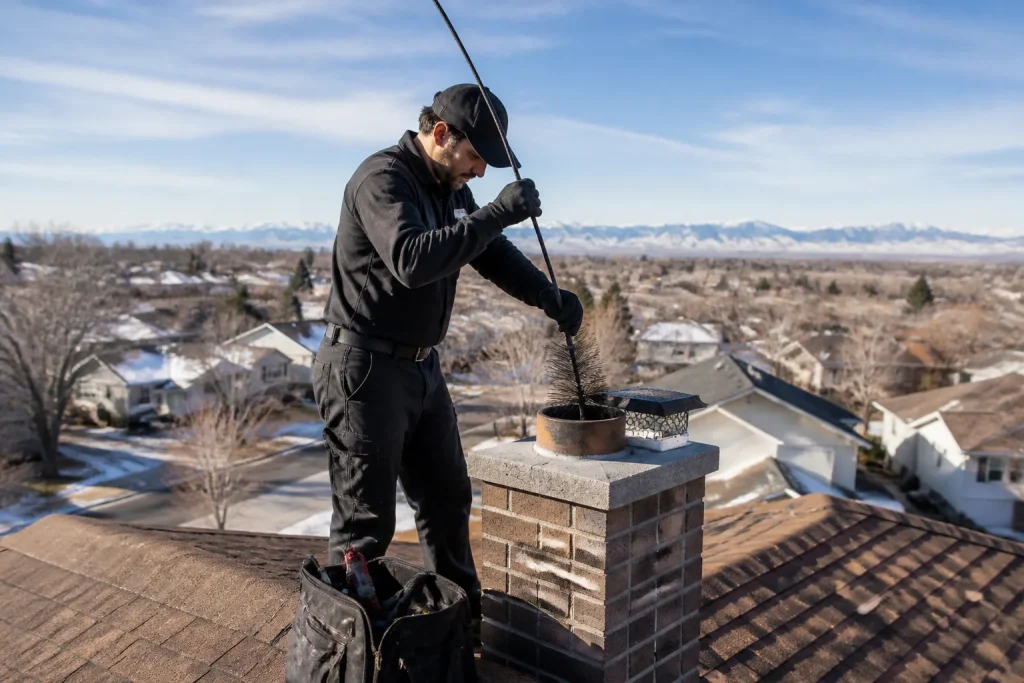
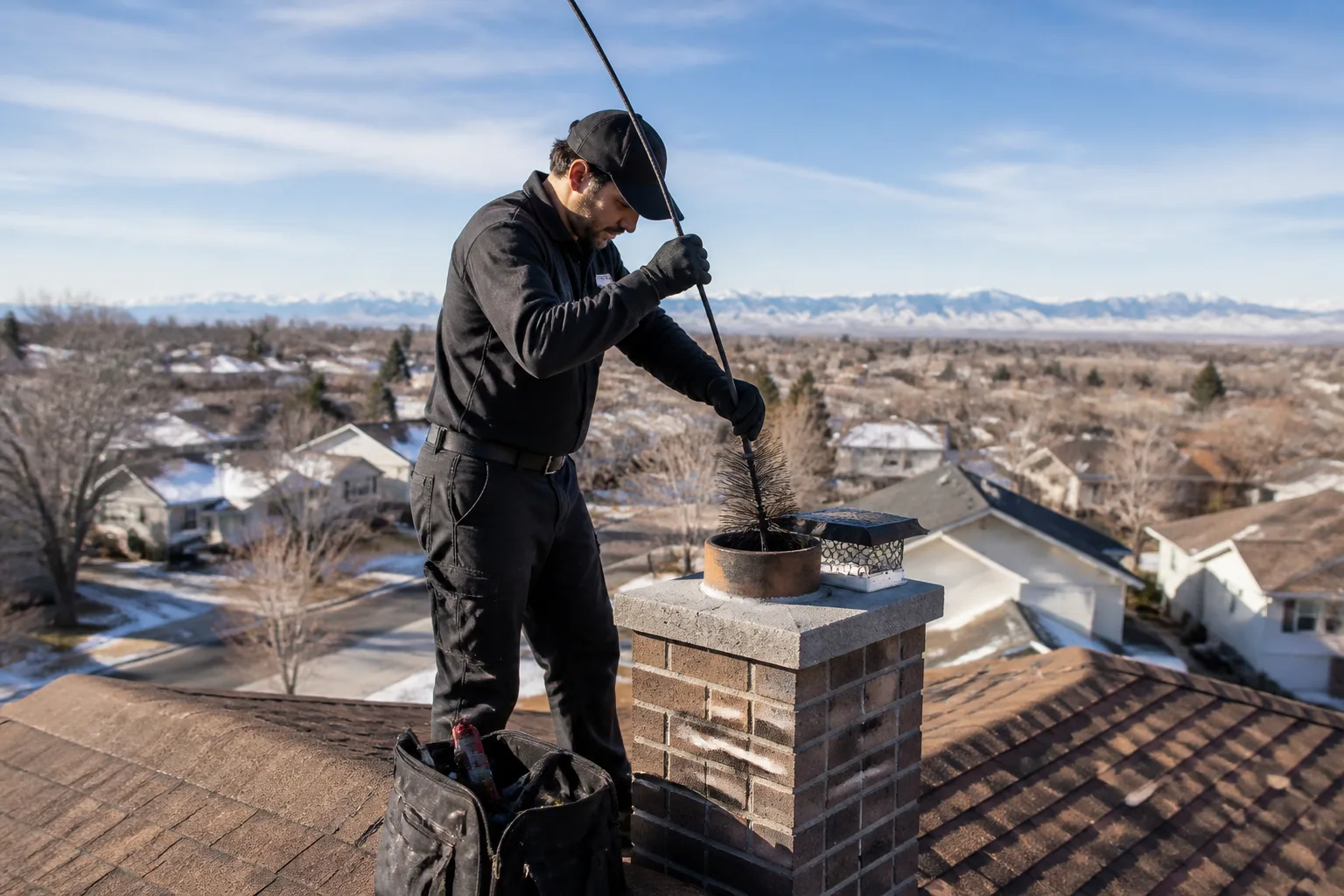
Copperfield is a wholesale supplier to the chimney trade. Their catalog runs the length of the system: flue brushes and rods, flexible stainless liner systems and their fittings, chimney caps, top-sealing dampers, and the sealants and adhesives that hold a crown or a cap termination together. For a Northglenn homeowner, the categories that matter most are brushes and rods (the sweep itself), liner components (repair and retrofit), and caps and dampers (keeping water and animals out).
Why the source matters: a professional brush is built to a spec. Bristle stiffness, brush diameter relative to flue size, and rod flexibility all affect how much glazed creosote actually comes off a clay tile wall versus how much gets polished smooth and left behind. A consumer brush from a hardware store is designed for light touch-ups, not for the deposits that build up over a heating season in a wood-burning fireplace. In our experience, that difference shows up most in older masonry chimneys with clay liners, where a too-small or too-soft brush skates over the terra cotta instead of scouring it.
The same logic applies to the parts you can’t see. Caps, dampers, and crown sealants from a trade supplier are specified for the application; retail equivalents are often sized generically. On a Northglenn roof, where freeze-thaw cycles do real work on masonry, that spec difference is the difference between a cap that lasts and one that rusts through or blows loose.
Brush and Rod Specs: Why Professional-Grade Matters in Northglenn’s Older Chimneys
Northglenn has a mix of housing stock, and the chimneys in the older neighborhoods tend to be clay tile lined. Clay is durable but it cracks, and once a flue tile cracks, the sweep has to be careful: the brush still needs to remove creosote, but it can’t be so aggressive that it opens up an existing fracture. Professional rods let a technician work a flue with control, feeling for obstructions and adjusting pressure, rather than forcing a brush down and hoping.
Here’s what to look for when a crew talks about their equipment:
- Brush diameter matched to flue size. A brush that’s too small leaves creosote on the walls; one that’s too large jams or damages tiles. The right fit is measured, not guessed.
- Rods with enough flexibility for offsets. Many Northglenn chimneys aren’t straight. Flexible rods follow the flue; stiff ones fight it.
- Poly or wire bristles chosen for the deposit. Glazed, hardened creosote needs a different approach than soft soot. A one-brush-fits-all sweep is a shortcut.
- Drop cloths and a sealed work area. The sweep is only good if the soot ends up in the bag, not on your living room floor.
In our experience, most chimney problems homeowners describe as “the sweep said something looked wrong” trace back to a sweep that was never equipped or authorized to do the repair. That’s the gap a full-system specialist closes. We handle the sweep and the repair, no referrals and no second appointment.
Liner Products: When a Flexible Stainless Liner Is the Right Answer (and When It Isn’t)
Copperfield distributes flexible stainless liner systems, and they’re the right solution for a specific set of conditions: a deteriorated or unlined flue that needs a new continuous liner, a flue that’s oversized for the appliance and drafts poorly, or a chimney being converted for a new insert or appliance that requires a properly sized flue. Flexible liner is also the practical choice on chimneys with offsets, since it can be pulled through bends that a rigid liner can’t negotiate.
It isn’t always the answer. When the clay tiles are cracked but structurally sound and the rest of the flue is intact, a resurfacing approach can restore the liner without pulling a new stainless system through the chimney. That’s where HeatShield comes in. It’s a resurfacing product applied to the interior of the flue to seal cracks and smooth the surface, and it’s a real cost-saving option that most sweep-only companies can’t offer because they don’t carry the capability. The trade-off is honest: resurfacing works on a flue that’s still sound enough to hold the repair; a badly deteriorated or unlined flue needs a full liner.
The decision isn’t one you can make from a photo on a phone. It comes down to flue condition, appliance type, and the measurements taken on site. The right answer is the one the inspection supports, not the one that’s easiest to sell.
How Do You Verify Your Contractor Is Using the Right Parts?
Ask directly, and ask for specifics. A contractor who’s genuinely sourcing professional-grade materials will answer these without hesitation:
- “Which Copperfield product are you installing, and why that one?” A real answer names the product and ties it to your flue’s condition, not a generic pitch.
- “What liner diameter are you specifying, and how did you arrive at it?” Diameter is matched to the appliance and the flue’s height and shape. A number pulled from thin air is a red flag.
- “What’s the flue length, and how does the liner run through it?” Offsets, turns, and total run all affect the liner choice. The contractor should know them before ordering.
- “What’s the appliance?” Wood-burning fireplace, insert, or gas appliance each call for different liner specs. The answer should match what’s actually in your home.
- “Can I see the camera footage?” A liner recommendation should be backed by video of the flue interior. If you can’t see the problem, you can’t evaluate the fix.
Any contractor can name a brand. The verification is in whether the spec matches the application, and whether the contractor can show you why. That’s the question worth asking, whether you’re in Northglenn or anywhere else along the Front Range.
What a Full-System Job Looks Like When Copperfield Components Are Used Throughout
A full-system specialist doesn’t treat the sweep, the liner, the cap, and the crown as separate errands. On a typical job, the sequence runs like this: the sweep clears the flue and firebox, the inspection follows with camera work to document condition, and then the repair scope is set from what the camera found. If the flue needs a liner, the flexible stainless system (often from a supplier like Olympia Chimney or Copperfield) goes in with the correct diameter and termination. If the crown is cracked or the cap is missing, those get addressed in the same visit, because a liner installed under a failing crown is a liner that takes on water from above.
That last point is the one homeowners miss most. Water intrusion at the crown and cap is the leading cause of long-term chimney deterioration, and a sweep that ends at the flue and skips the top of the chimney leaves the biggest problem untouched. A complete job, done with trade-grade components from the firebox to the cap, closes that loop. We use professional-trade brands, not retail hardware-store materials, and we do the whole scope rather than clean what exists and refer the rest.
Our technicians have up to 8 years of experience, and we bring the same full-system approach to every Northglenn chimney we look at, whether it’s a routine annual sweep or a liner assessment on a house that’s just changed hands.
When to Call a Pro
Some chimney work is cosmetic and can wait. Other work can’t. Call a professional if you see cracked or missing flue tiles through the firebox, if the chimney has no cap, if you’ve had a chimney fire (even a small one), if the crown is cracked or crumbling, if you smell creosote or smoke in the house when the fireplace isn’t in use, or if you’re buying or selling a home in Northglenn and need an inspection that will satisfy a lender or a buyer. Cracks in the flue can let combustion gases into the home, and carbon monoxide is the concern nobody should be casual about. That’s a job for a trained technician, not a homeowner with a flashlight.
If the only issue is a routine annual sweep before burning season, that’s a straightforward booking. Call (866) 616-5448. We answer 24/7. Fast dispatch from 7am to 7pm, Sunday through Friday.
Related services in Northglenn: chimney sweep, chimney repair, and fireplace repair.
The Bottom Line
Copperfield is a supply chain signal, not a service brand. If a Northglenn contractor names it, that’s a good start, but the real question is whether the parts match your flue’s condition and whether the same crew can do the sweep, the liner work, the cap, and the crown without handing you off to someone else. Ask which product, which diameter, which appliance, and can you see the camera footage. Those four questions separate a full-system specialist from a sweep-only operation.
If you’re in Northglenn and need help, Chimney Sweep Northglenn offers free estimates – call (866) 616-5448. For a broader view of what we do, start at Chimney Sweep Northglenn.
Frequently Asked Questions
No. Copperfield Chimney Supply is a trade distributor that sells brushes, rods, liner systems, caps, dampers, and sealants to chimney professionals. When a contractor says they use Copperfield materials, they mean they source from the professional trade channel, not that Copperfield performs the work. Call (866) 616-5448 for a free estimate on your Northglenn chimney.
It depends on the condition of the flue. Cracked but structurally sound clay tiles can often be restored with a resurfacing product like HeatShield, while a deteriorated or unlined flue usually needs a full flexible stainless liner. The decision should be based on camera inspection footage you can see, not a guess. Call (866) 616-5448 for an exact quote – estimates are free.
Once a year is the standard for a chimney in regular use, and more often if you burn heavily or notice creosote buildup. A Northglenn chimney that sees a full heating season of wood fires should be checked annually, and an inspection should precede the first burn of the season. Call (866) 616-5448 to book a sweep – estimates are free.
Creosote accumulates in the flue, and glazed creosote is the fuel a chimney fire needs. Skipping the sweep also means cracks and blockages go unnoticed, and combustion gases can back up into the home. None of that is a scare tactic; it’s what the inspection is designed to catch before it becomes a repair. Call (866) 616-5448 for an exact quote – estimates are free.
Written by the team at Chimney Sweep Northglenn.
Need Chimney Cleaning Help?
Call Chimney Sweep Northglenn - the local pro we connect you with is licensed and insured, here with fast help in Northglenn.
(866) 616-5448